

The Ultimate Guide to Strategic Distribution
The Ultimate Guide to Strategic Distribution
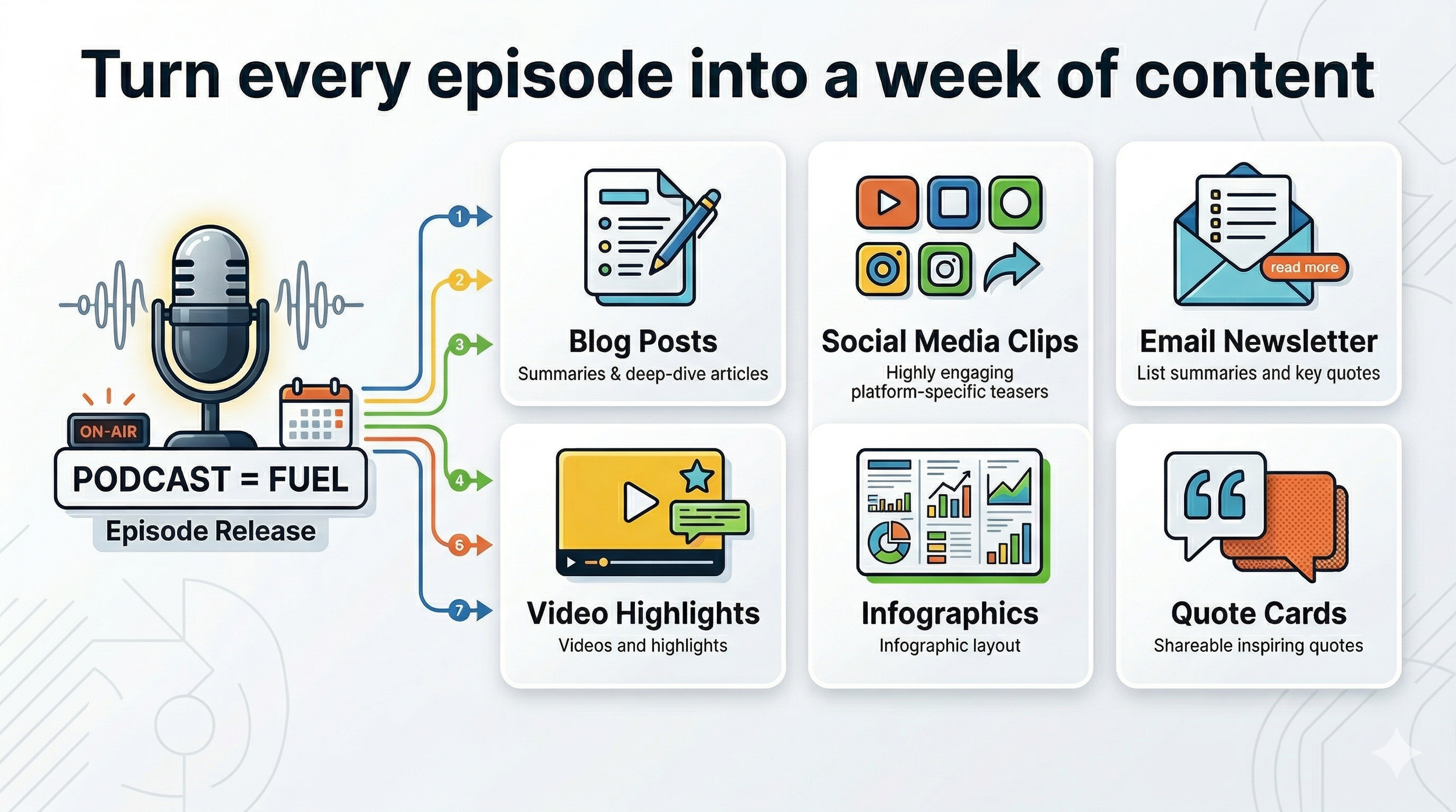
For many creators, the biggest challenge isn't coming up with one great idea; it’s the constant pressure to produce new material every single day. The solution to this "content treadmill" is a strategic shift: stop creating from scratch and start repurposing.
By using your primary long-form work as "fuel," you can maximize your impact and ensure you are everywhere your audience consumes media.
The "Podcast as Fuel" Strategy
The core of this strategy is viewing a single pillar piece of content, such as a podcast episode, as the "fuel" for an entire ecosystem of assets. Instead of a one-off event, your episode becomes the source for a diverse week of content across multiple platforms.
This approach offers several key benefits:
Maximizing Value: You get more mileage out of a single recording session.
Consistency: It ensures you have high-quality posts ready for the entire week without needing a new concept every day.
Omnipresence: You can reach different segments of your audience on the specific platforms they prefer, whether that is their email inbox, social feeds, or a blog.
How Short-Form Content Drives Long-Form Discovery
The primary goal of distributing content across various platforms is to create gateways to your work.
Short-form content drives discovery for long-form episodes by acting as a low-friction entry point across multiple platforms, allowing you to "be everywhere your audience consumes."
Because audiences are often hesitant to commit to a full hour-long podcast immediately, smaller assets act as low-friction entry points. These "snacks" provide immediate value and spark enough interest to lead the viewer back to the original "fuel" source for the full experience.
The primary goal of distributing content is to create multiple entry points to your work.
This works through several mechanisms:
Low Friction Entry: While a potential audience member might not commit to a full-length podcast immediately, they are likely to engage with a "snackable" asset like a social media clip or a quote card.
Omnipresence: By being "everywhere your audience consumes," you ensure your message reaches them on their preferred platforms, whether that is via an email newsletter, a blog post, or a social feed.
Algorithmic Reach (External Info): Information outside of the source notes that short-form platforms (like TikTok or Reels) use discovery algorithms that are more likely to show your content to new people than long-form platforms, which often rely on existing subscribers.
Meeting Audiences Where They Are: By repurposing a single podcast episode into formats like social media clips, infographics, and quote cards, you can reach potential listeners on the specific platforms they already use. This removes the need for them to search for your podcast initially; instead, the content finds them.
The "Fuel" Concept: The long-form podcast serves as the "fuel" or the core source of information. Short-form pieces extract the most engaging or valuable "nuggets" from that fuel to capture immediate attention.
Bite-Sized Engagement: Items like quote cards and social media clips are designed for quick consumption. Once a viewer is engaged by a short highlight, they are more likely to seek out the full long-form episode to get the complete context or deeper insights.
Diverse Content Types: Using a variety of formats—including blog posts, video highlights, and email newsletters—ensures that the "discovery" happens through different learning styles (visual, written, and auditory), casting a wider net for the original long-form episode.
The 6 Essential Content Branches
To successfully turn one episode into a week of engagement, you should branch out into these six formats:
Blog Posts: Transform the spoken insights from your episode into a written format for those who prefer reading or for SEO purposes.
Email Newsletters: Deliver the most impactful takeaways directly to your audience's inbox, creating a dedicated touchpoint.
Quote Cards: Pull punchy, stand-alone ideas and place them on visual backgrounds. These are highly shareable and perfect for a quick scroll through social media
Infographics: Summarize complex ideas or data from the episode into a visual, easy-to-digest summary.
Social Media Clips: These are very short, often vertical video snippets designed for high-engagement platforms like Instagram or TikTok.
Video Highlights: These segments are slightly longer than clips and capture a complete thought or a "best of" moment, often hosted on platforms like YouTube to drive deeper engagement.
Ready to grow your business through podcasting? Let’s launch your podcast together. Get in touch!